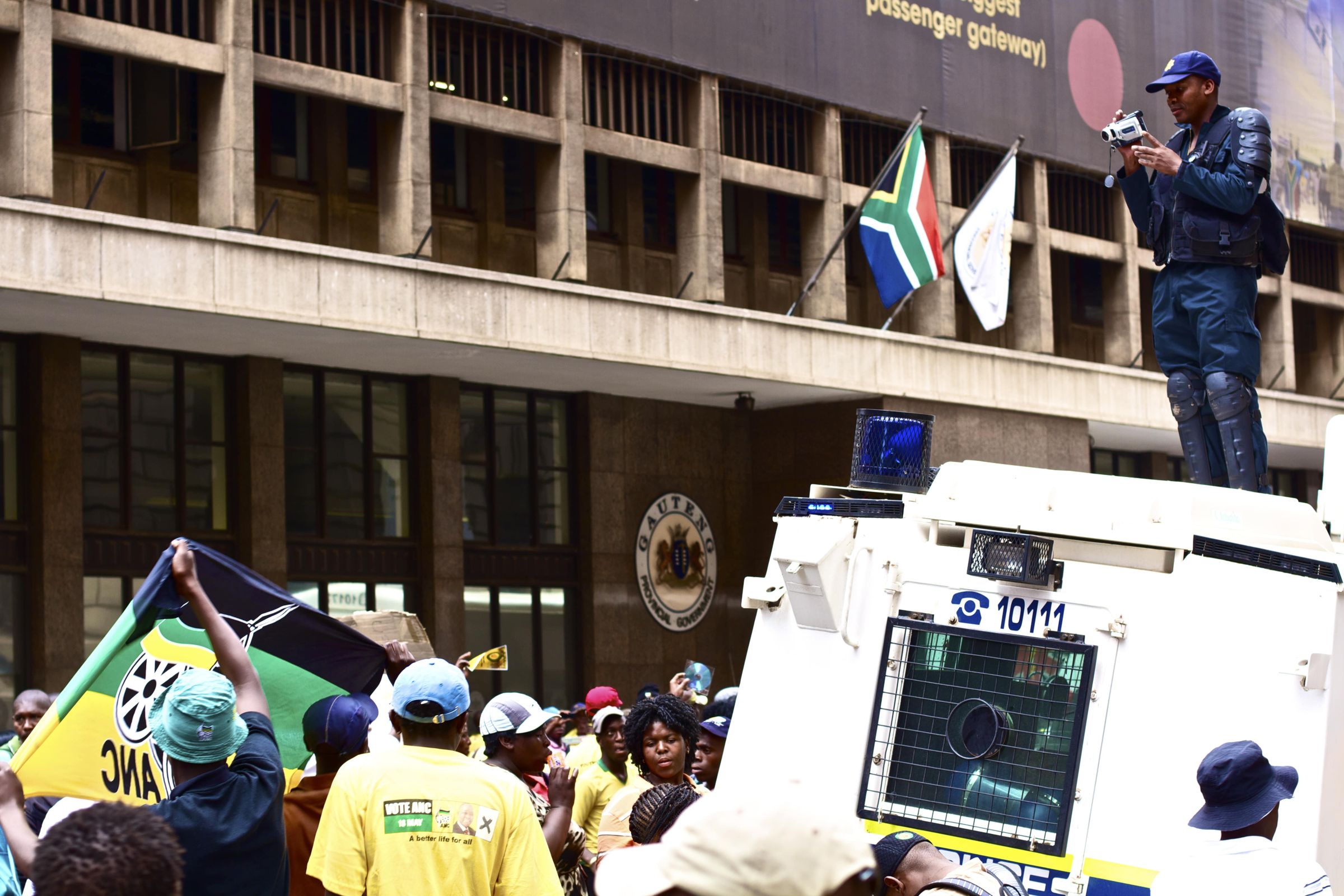
South Africa’s largest cities are about to become the country’s most closely watched political battlegrounds. On 4 November, just over two weeks away, residents of Johannesburg and Cape Town will vote in local government elections that will shape the services they rely on every day: water, electricity, sanitation, safety and jobs.
The stakes for ordinary citizens were on full display over the weekend as the two biggest parties took their campaigns directly to the voters. President Cyril Ramaphosa led the ANC’s push in Cape Town, long a stronghold of the Democratic Alliance, while the DA’s Johannesburg mayoral candidate, Helen Zille, unveiled her party’s plan for the country’s economic powerhouse before a large crowd of supporters dressed in blue.
For residents of Johannesburg, a city described in the campaign as financially ailing, Zille’s five-point plan for the DA’s first year in office centred on the basics of daily life. Speaking at the party’s final rally under the theme “Now or Never: Don’t Joburg’s Last Chance”, she listed the priorities as fixing the city’s finances, putting honest and capable people in charge, declaring war on corruption, making the municipality work for residents, and restoring law and order.
Zille argued that the DA’s record in the municipalities it already governs showed what residents could expect. In Cape Town, she said, old water and sewer pipes were being replaced at five times the rate of Johannesburg, and when Eskom cuts power, Cape Town has systems to keep the lights on. She also claimed there were more working streetlights in Khayelitsha than in Sandton, and that DA-run Midvaal in Gauteng had achieved 12 consecutive clean audits. On jobs, she said Cape Town had added more jobs than all seven other metros combined since 2016, creating 120 000 more jobs than Johannesburg, Tshwane, Ekurhuleni, eThekwini, Nelson Mandela Bay, Buffalo City and Mangaung put together.
Government, she told supporters, should create the conditions in which businesses can invest, grow and employ people. A factory needs electricity, a restaurant needs water and a trader needs clean, safe streets, she said, adding that every business needs a municipality that answers its phones, processes its permits and gets out of the way of people who want to work. A DA administration, she promised, would replace pipes, fix substations and maintain roads, backed by honest and capable officials who would be supported if they performed, face consequences if corrupt, and lose their jobs if they consistently failed.
On corruption, Zille said Johannesburg needed its own “Madlanga moment”. She promised an independent investigation into the corruption that has crippled the city, conducted through public hearings with published findings, and said the DA would act on evidence from the Auditor-General, whistle-blowers and the Zondo Commission. The party would rebuild the city’s anti-corruption capacity, shield it from political interference, protect whistle-blowers, scrutinise city contracts starting with the biggest and most suspicious, and open procurement to public scrutiny, with no favours for connected friends.
Meanwhile, in Cape Town, Ramaphosa campaigned door to door in Athlone, Rylands and Khayelitsha before addressing public meetings in Emfuleni and Monwabisi Park. He was bullish that the ANC was “in the game to win”, even though its voter support in the city and the wider Western Cape has declined consecutively over years. The ANC last governed Cape Town in 2006, and the party is pinning its hopes on building on its 2021 support as it challenges the DA in the metro.
Ramaphosa directed his message at the service gaps affecting poorer communities, taking aim at the DA’s governance record. He described Cape Town as “a tale of two cities”, saying quality services were concentrated in wealthy areas while townships faced severe water, housing and sanitation challenges. Affluent areas enjoyed high-tier infrastructure, he said, while township and informal settlements continued to struggle with basic needs.
He also pledged to redouble government efforts to fight crime, saying rebuilding public trust in law enforcement required aggressively rooting out corruption and criminal infiltration within the SA Police Service. The deployment of soldiers to crime-stricken communities, he said, was meant to support and bolster police work rather than replace officers.
With both parties framing the elections around service delivery, corruption and public trust, voters in the two metros will decide on 4 November who takes charge of the institutions that most directly affect their daily lives. Whether the promises made in Athlone and at the Johannesburg rally translate into cleaner pipes, safer streets and honest government is the question residents will live with long after the ballots are counted. Further coverage of the campaigns is available at https://mg.co.za/news/south-africa/2026-10-17-elections-anc-and-da-wrestle-for-control-of-top-cities/.