South Africa’s results system has been independently tested, audited and declared ready for the November 4 local government elections, the Electoral Commission of South Africa announced this week, as the country’s electoral machinery enters its final week of preparation.
Chief electoral officer Sy Mamabolo told journalists at the launch of the IEC’s Results Operations Centre in Gauteng on Wednesday night that findings raised during an independent audit of the results system had been fixed. “Our report to the nation is that those findings have now been remediated and the results system is hereby declared ready,” he said.
Political parties were invited to audit the system themselves from October 8 to 12. Five took up the offer. No material findings emerged from that review, Mamabolo said. The party checks carry particular weight after the uMkhonto weSizwe Party challenged the 2024 national election results over a two-hour blackout of the National Results Operations Centre leaderboard, a case the Electoral Court dismissed in September this year.
Technical optimisations have been implemented to keep results flowing accurately and continuously to the IEC website, mobile application and other public platforms. “The results process must breathe on both flanks of swiftness and accuracy,” Mamabolo said. A virtual Results Centre will allow party officials and other stakeholders to follow results and reports remotely, without travelling to the national centre or provincial facilities.
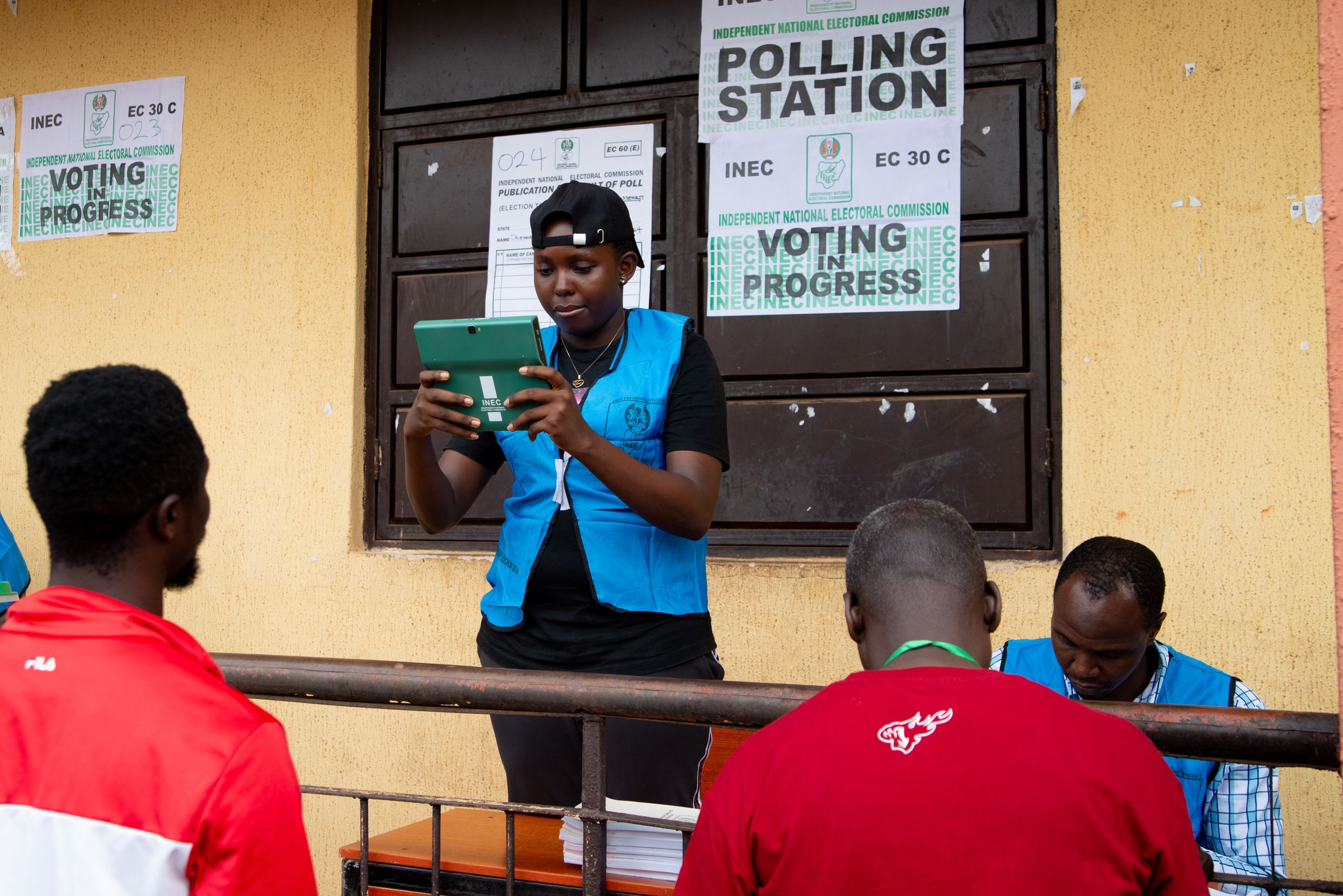
On the ground, another 14,000 voter management devices are being brought into operation, on top of the 40,000 already deployed. The devices and their applications have undergone further functional testing intended to improve performance and cut the time voters spend casting ballots. “The technology of the VMD must not impair voting experience, but must serve to improve that experience and operational efficiency,” Mamabolo said.
The scale is considerable: 29.2 million registered voters, more than 136,000 candidates and roughly 23,000 voting facilities nationwide. Special voting begins on Monday and Tuesday, with more than 600,000 home visits planned for November 2 and 3. About 80% of approved home visits are for voters over 60, and women account for 74% of approved special votes. The Commission has recruited 888,000 staff for the election.
IEC chairperson Mosotho Moepya described the safeguards built around the process as a “multi-layered matrix” of quality controls. Systems and processes have been subjected to performance testing, load evaluation, independent security audits, operational simulations and stress tests, with dry runs conducted across the country.
Voting and counting will proceed under what Moepya called “supervised transparency”, with accredited observers, political party agents and the media able to monitor proceedings. Counting and result determination take place at each voting station after polls close, in the presence of observers and party agents, unless the law provides otherwise.
Every result slip will then be scanned and published on the IEC website and results system. “Every result slip will be audited. Not 10% of the results, not randomly. Each one of them will be audited,” Moepya said. Party agents and observers may photograph completed slips. The results system uses double-blind capturing to prevent typographical and human entry errors, and automated mathematical and logical checks block results from being processed until required checks are satisfied.
Results will remain available on the website and results system, giving parties, independent candidates, the media and others time to scrutinise them, and objections can be lodged within legally provided timeframes. The Commission will continue liaising with parties and candidates until final results are declared.
Queues remain a known weak point. Moepya noted that about 850 voting stations opened or closed late in the 2024 elections because of long lines. “We do not want long queues. We want to finish this job, but finish it well,” he said.
On information integrity, Moepya warned that safeguarding accurate information is inseparable from safeguarding the election itself in an era when digital disinformation travels faster than the truth. He said the Commission welcomes scrutiny rather than seeking isolation from it, praising journalists who hold power to account responsibly. “Trust is never a permanent entitlement we have. It must continuously be earned through institutional transparency and behavioural compliance,” he said.