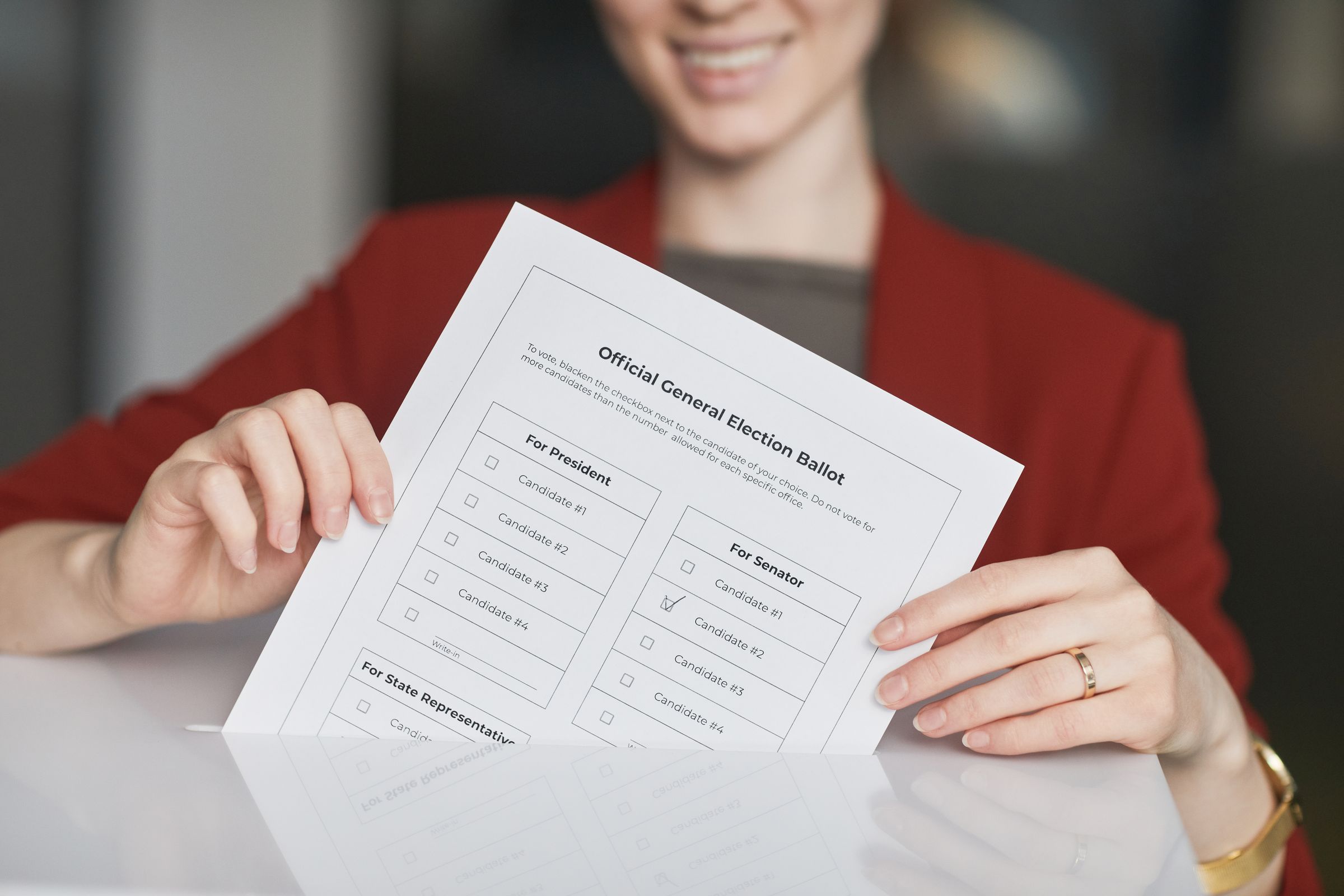
South Africans went to the polls on Wednesday in local government elections that will test not only party strength but the capacity of municipalities to deliver basic services, with governance failures at the centre of a contest for control of the country’s major cities.
Polling stations opened at 7:00 am (0500 GMT) and close at 9:00 pm (1900 GMT). More than 29 million voters are registered. Participation, however, has been in decline: the last municipal elections, in 2021, drew fewer than half of registered voters, with turnout at just 46 percent. Of the 2.6 million people approved to cast special votes over two days, only 1.4 million did so, according to the electoral commission, which reported the figures on Tuesday.
The election comes as a weary electorate contends with crumbling infrastructure, dry taps, persistent inequality and unemployment above 30 percent, deepening public disillusionment with the political establishment. Political analyst Kingsley Makhubela, a former diplomat, told AFP the vote is likely to turn on what voters experience in their daily lives rather than political loyalties, pointing to what he called “bread and butter issues” such as water, electricity, roads and sewage. “People are not going to vote on sentiments,” he said.
The African National Congress, the party of anti-apartheid hero Nelson Mandela that led the country’s liberation struggle, remains projected to emerge as the largest party nationally, but polls point to a further erosion of its support. Once the dominant force in South African politics, the ANC fell below 50 percent of the vote for the first time in the 2021 municipal elections. It suffered further losses at the 2024 national vote, securing just over 40 percent and forcing it to share power in a government of national unity with nine other parties.
That decline has opened space for rivals. The liberal Democratic Alliance, the country’s second-largest party, has set its sights on Johannesburg, campaigning hard to capitalise on service delivery failures in the ANC bastion. Meanwhile, the breakaway opposition uMkhonto weSizwe party, led by former president Jacob Zuma, is mounting a strong challenge for the east coast port city of Durban. MK made a dramatic electoral breakthrough in 2024, drawing support away from the ANC to finish third nationally, with 14.5 percent of the vote.
“We are going to start by taking back our country here,” Zuma said on Sunday in Durban, a city at the centre of growing anti-migrant sentiment that has become a prominent theme of the election campaign.
The institutional stakes are considerable. South Africans elect municipal councillors, who then choose mayors and form the administrations that will run their cities. With outright majorities far from assured in several major cities, the vote could usher in another round of complex coalition negotiations, as parties bargain over the alliances needed to govern. Coalition rule is already a feature of local government: 74 of the country’s 257 municipalities were governed by coalitions or minority administrations by February 2026, according to the Mapungubwe Institute for Strategic Reflection.
Makhubela argued that coalition government could foster a new culture of political tolerance in South Africa’s increasingly fragmented political landscape, where, for years, “the language… has been political enemies”.
The final results, expected on Sunday, will offer a clearer picture of the political landscape before the next general election in 2029. They will also carry implications for the ANC’s own future, with the party due to elect a new leader at its December 2027 conference, a contest that will help determine who leads it into the next national race.
At polling stations, voters framed their choices in terms of accountability for daily life. Thembinkosi Somana, 50, first in line at a polling station in Langa, Cape Town’s oldest township, said: “I want things to change… people must get work. People mustn’t suffer.” In Johannesburg, Andrea Smith, 41, who works in human resources, arrived with her husband and child hoping the election would bring change to the country as a whole. “We shouldn’t be having to worrying about electricity and water. It’s been going on for years,” she told AFP.