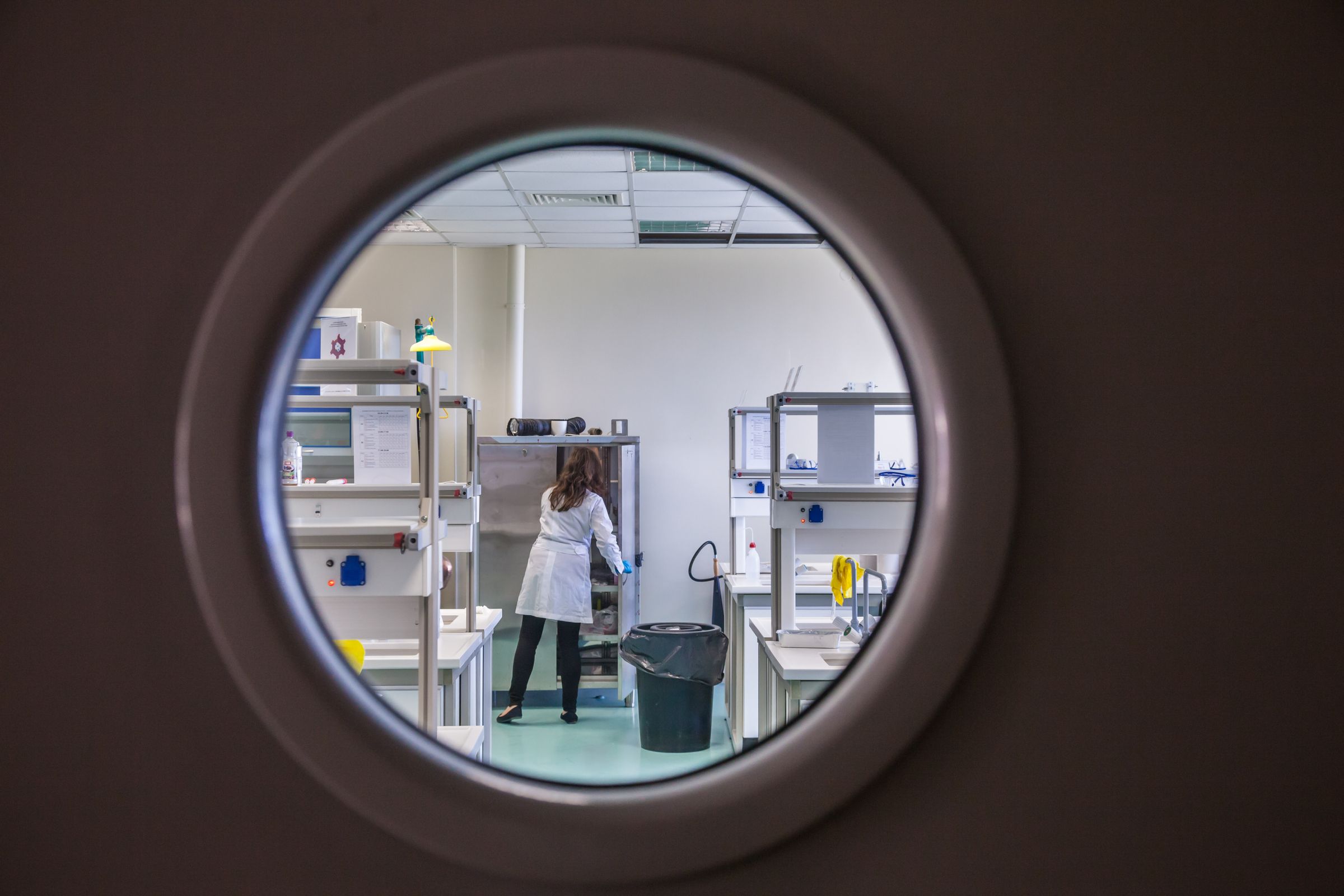
A facility meant to change how South Africans access essential medicines has opened its doors in Pretoria. The Council for Scientific and Industrial Research launched its FuturePHARMA facility, a specialised site where active pharmaceutical ingredients, known as APIs, can be developed, scaled up and manufactured locally. For a country that watched international supply chains strain during the COVID-19 pandemic, the launch addresses a vulnerability that was felt well beyond laboratory walls.
Ms Lusizo Makhubela, Chairperson of the Portfolio Committee on Science, Technology and Innovation, attended the official launch. She framed the facility as proof of what steady public investment can achieve.
“Facilities such as FuturePHARMA demonstrate why sustained investment in science, technology and innovation matters. They strengthen our ability to turn scientific knowledge into products, industrial capability and solutions to real challenges, while building greater resilience for South Africa and the African continent,” Ms Makhubela said.
The pandemic sits at the centre of why this matters. When COVID-19 disrupted global logistics, South Africa and the rest of the continent were exposed to the risks of relying on other countries for essential health products. FuturePHARMA is designed as a direct answer to that exposure, building the domestic scientific and manufacturing capability needed for more resilient pharmaceutical supply chains and, in time, for responding more effectively to future pandemics and health emergencies.
What distinguishes the facility is its open-access model. Researchers, innovators and pharmaceutical companies, including smaller enterprises, can use specialised infrastructure that would otherwise be difficult and costly to establish on their own. The facility also bridges a familiar gap: the distance between a promising piece of research and commercially viable production. In doing so, it opens opportunities for collaboration between research institutions, universities and industry.
The benefits extend past the laboratory. According to Parliament, FuturePHARMA matters for industrial development, skills development, innovation and sustainable economic growth. For the African continent, expanding pharmaceutical research and manufacturing capacity opens the door to stronger regional collaboration, more robust supply chains and greater participation in producing essential health products.
Meanwhile, Ms Makhubela and the committee were careful to note that a building by itself will not deliver these outcomes. Sustained investment in research and development, specialised skills, equipment and the day-to-day operation of scientific facilities remains essential. That investment must be paired with partnerships involving industry, universities, investors and other research institutions to carry technologies from research through development, commercialisation and manufacturing.
Regulation plays its part too. An effective regulatory environment, the committee argues, must maintain strong quality, safety and manufacturing standards while keeping processes predictable and appropriately coordinated so innovation can progress efficiently. Early engagement between researchers, manufacturers and regulators, the statement suggests, can secure both goals without putting public health at risk.
The launch, in the committee’s view, shows the value of investing in the capabilities that let South Africa turn scientific knowledge into practical solutions. Whether FuturePHARMA succeeds in the long run will depend on sustained funding, effective partnerships, appropriate regulation and the ability to link research capability with industrial demand and markets.
The Portfolio Committee says it will keep examining how investments in science, technology and innovation infrastructure can strengthen the National System of Innovation, support economic and social development, and contribute to a more resilient South Africa and African continent.
The statement was issued by the Parliamentary Communication Services on behalf of Ms Makhubela. Media enquiries can be directed to the Committees’ Media Officer, Sibongile Maputi, on 021 403 8041 or 081 052 6060, or by email at [email protected].