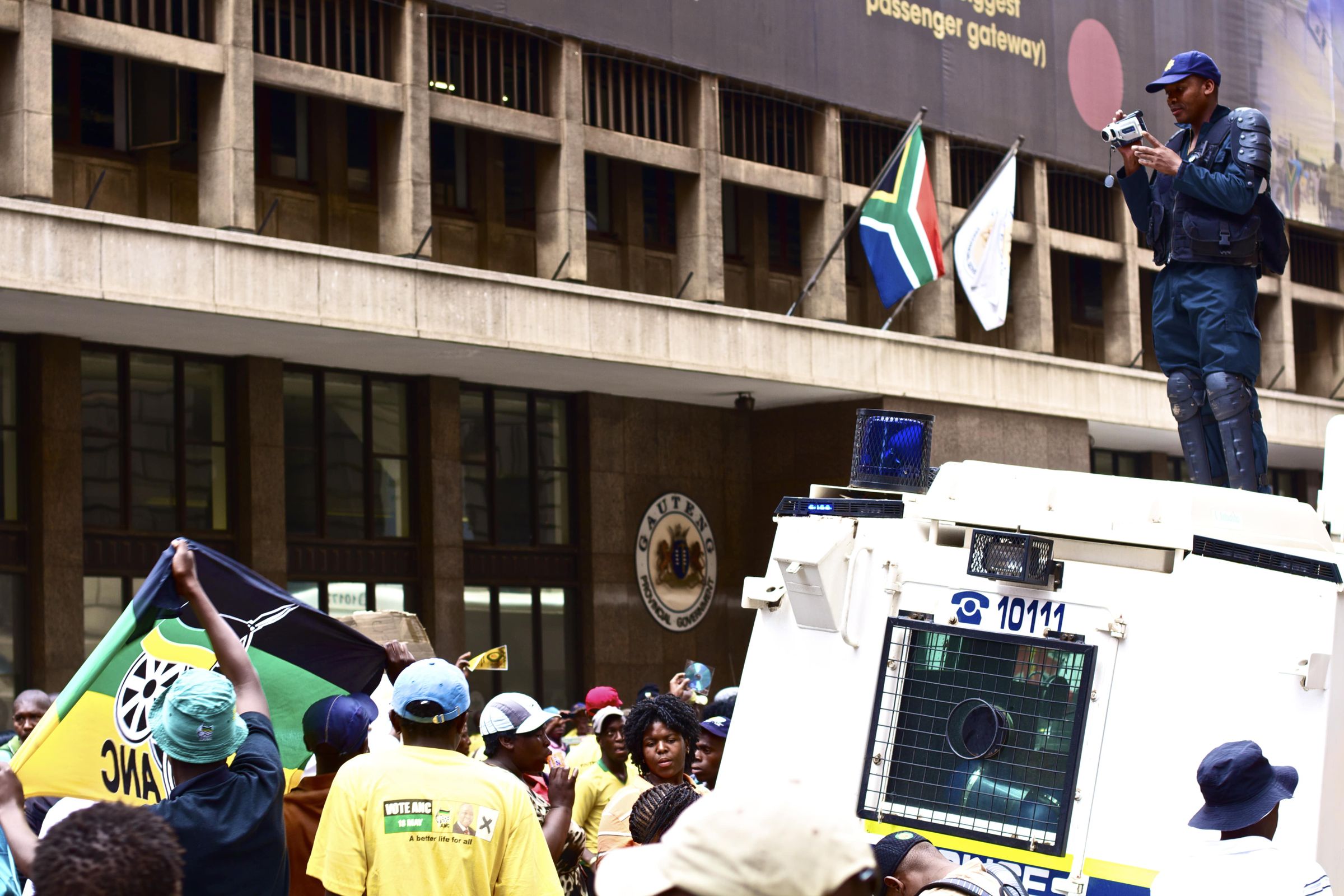
South Africa’s ruling African National Congress is heading for its worst electoral result in the party’s history, and the shortfall is being read, in part, as a verdict on the delivery of basic services. With roughly 80 percent of ballots counted in the country’s municipal elections on Friday, the election authority’s dashboard put the ANC at 31.8 percent of the vote, still the largest party but far below its previous showings. Final results are expected by Sunday.
The numbers confirm projections released Thursday by the Council for Scientific and Industrial Research, a state-funded research body, which had put ANC support at nearly 32 percent. That would mark a steep decline from just over 40 percent at the 2024 national polls and 46 percent at the last municipal elections in 2021.
Analysts tracing the party’s decline point to a record of failing services. Voters punished the ANC for high crime and unemployment, corruption scandals and the breakdown of basic services such as water and electricity, the very infrastructure on which daily life in South African municipalities depends. The party has been the country’s largest since it led South Africa out of apartheid in 1994, but its share of the vote has fallen sharply as those delivery failures accumulated.
Louw Nel, senior political analyst at Oxford Economics Africa, said the turnout figures suggest ANC voters did not stay away, as many had expected, but instead showed up and voted for alternative parties. An outcome of 32 percent, he said, would be “the party’s worst nightmare coming true.”
Political analyst Daniel Silke told AFP the result was the most severe the ANC would have feared. “It’s the ANC’s worst result in history,” he said, adding that it would undermine the party’s ability to exert authority across South Africa, not just at a local level but at a national level as well. “And opposition parties will be smelling blood when it comes to the next election in 2029,” he said.
Meanwhile, the count shows a shifting landscape in the country’s major municipalities, where the practical business of running cities will now have to be negotiated. The pro-business, centre-right Democratic Alliance was placing second with 24.2 percent of votes according to the 80 percent count, up from nearly 22 percent in the 2021 local government election. The DA is on course to win an outright majority in Cape Town, but projections point to hung councils in other large metropolitan areas, including Johannesburg, South Africa’s biggest city, and Tshwane, home to the administrative capital Pretoria.
The outcome remains unclear in the early stages of the vote count in eThekwini, the municipality centred on Durban, where former President Jacob Zuma is hoping his party, a splinter from the ANC, can seize a majority.
Where councils end up hung, the question of who can actually govern becomes central. Analysts have said the best option for stability in cities such as Johannesburg would be for the ANC to partner with the DA, mirroring the arrangement the two parties have in national government. But the two are ideologically opposed on key issues such as racial redress, a complication for any coalition tasked with restoring services in cities where the ANC’s grip has slipped.
For a party that has dominated South African politics for three decades, the municipal results point to a shrinking operational base. Whether the ANC can retain control of the country’s largest cities, and with them the machinery that delivers water, electricity and local services to millions of residents, will be settled in the coalition talks that follow Sunday’s final count.