Foreign Minister Ronald Lamola has confirmed that Taiwan’s representative mission remains in Pretoria more than three years after South Africa first ordered it to leave, turning a government directive into a prolonged test of Pretoria’s authority.
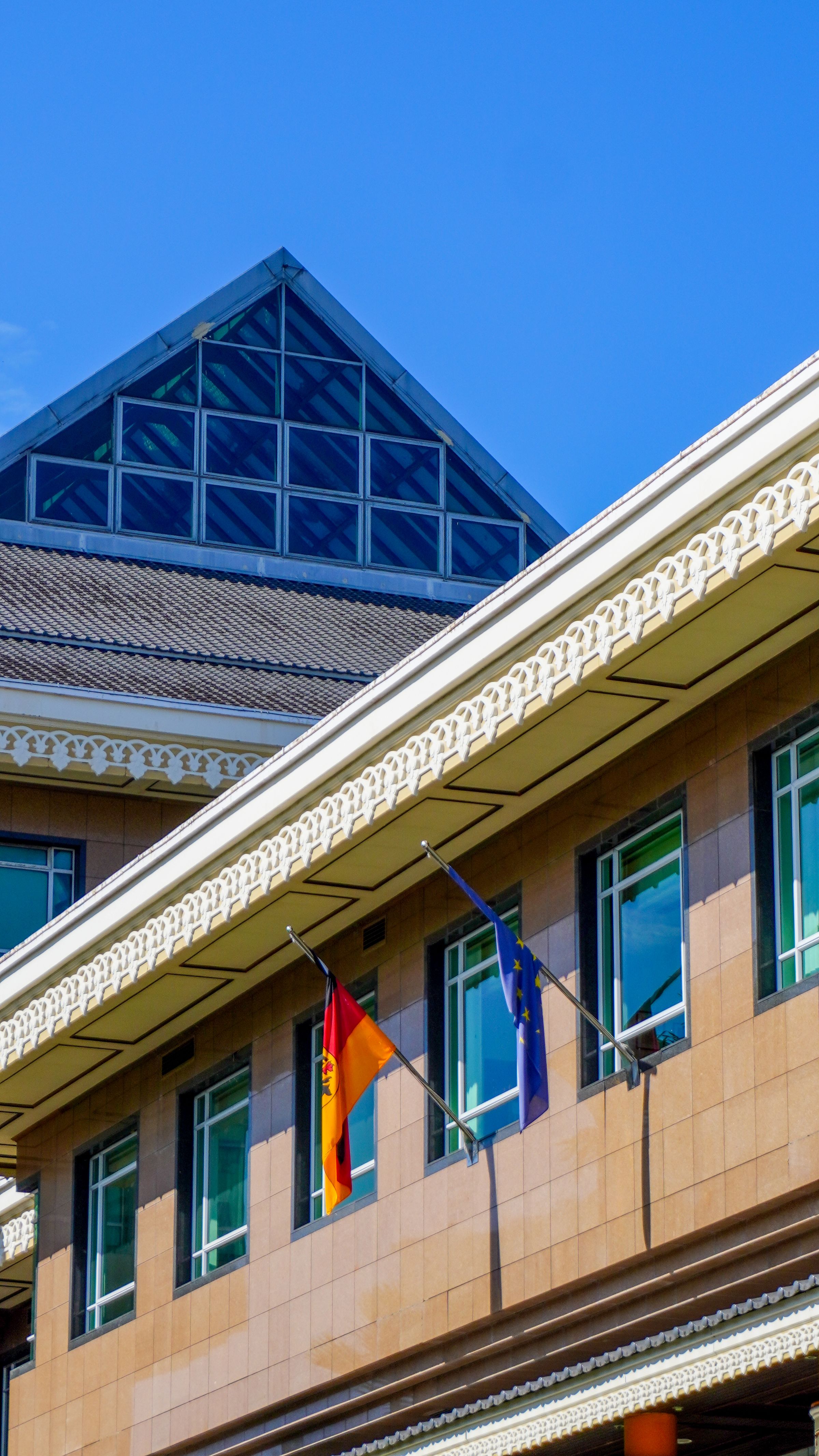
In a written reply to parliamentary questions, Lamola acknowledged that, despite measures taken by the state, the facility is still operating in the administrative capital. Those measures include a July 2025 government notice that unilaterally downgraded the mission and renamed it the Taipei Commercial Office. Yet the Taiwan-owned building continues to display “Taipei Liaison Office” signage and still receives tax exemptions and other privileges.
The government’s position is unambiguous. “The decision to instruct the Taipei Commercial Office to relocate is non-negotiable,” Lamola said, describing the relocation as a “logical and political imperative.” South Africa first began pressuring Taiwan to move its de facto embassy from Pretoria to Johannesburg in 2023, shortly after hosting a Brics summit attended by Chinese President Xi Jinping, according to a Foreign Ministry official in Taipei who previously spoke to Bloomberg.
Taipei, for its part, shows no sign of compliance. Hsiao Kuang-wei, a spokesman for the Foreign Ministry in Taipei, said in a statement on Tuesday that “Taiwan has consistently engaged with South Africa in a pragmatic manner.” He added that the ministry “once again calls on the South African government to uphold the standards expected of a democratic country governed by the rule of law, and not attempt to use local authorities as an instrument of coercion to force Taiwan to relocate its office.” The office will continue to operate in Pretoria until the two sides reach an agreement, Hsiao said.
What remains unresolved is the enforcement question. The South African government is consulting with authorities in Tshwane, the metropolitan municipality that includes Pretoria, on a “legally sound and diplomatically appropriate” way to compel the relocation without exposing itself to legal challenges or international repercussions. The consultation reflects the constraints on the state’s power in this matter. Because Taiwan owns the Pretoria property, constitutional protections for property rights limit the government’s ability to forcibly remove the mission, Lamola said.
Meanwhile, the stand-off has carried economic consequences. Taiwan retaliated against South Africa in September 2025 by imposing restrictions on chip exports critical to its automotive and technology industries, later suspending the curbs after Africa’s largest economy agreed to formal negotiations. More than a year on, those talks have yet to produce a breakthrough. The Department of International Relations continues to pursue a new Memorandum of Arrangement to govern bilateral trade, investment and cultural ties, Lamola said, adding that Pretoria wants to avoid the ongoing reality of “being ignored by the Taipei authorities.”
The impasse, as reported by Moneyweb, underlines the limits of Pretoria’s leverage as it seeks to uphold its One China policy while navigating domestic legal constraints and avoiding further economic fallout (see https://www.moneyweb.co.za/news/south-africa/taiwan-ignores-south-africas-demand-to-move-pretoria-office/). At stake is not only the location of an office but the credibility of a government directive that, on the evidence before Parliament, remains unenforced. Whether the consultation with Tshwane produces a legally sound mechanism to enforce it is now the question hanging over the department.