When Nomonde Buthelezi’s doctor told her in 2016 to cut out half the foods in her cupboard, she faced an impossible choice. She had been diagnosed with irritable bowel syndrome and was told to incorporate organic food into her diet, but the cost of an organic diet was beyond her reach. Her pantry held ultra-processed tinned foods with long shelf lives, bought in bulk to last the month, and processed meats such as polony.
“If I bought something in bulk, I didn’t care how healthy it was. At the time, my hunger dictated what I had access to. Even though in my mind and in my head, I hoped or I wished to eat certain foods, like fresh veggies and fresh fruits,” the 48-year-old recalls.
Her story mirrors a shift documented across South Africa and beyond. According to a report by the Global Health Advocacy Incubator (GHAI), diets are moving towards ultra-processed foods, eroding traditional food cultures and reshaping food systems in the process. The report finds that ultra-processed foods account for roughly 37% to 39% of total daily energy intake among low-income adults in South Africa, and identifies them as a major driver of obesity, non-communicable diseases such as diabetes, and global mortality. In South Africa, diabetes is the leading cause of natural death.
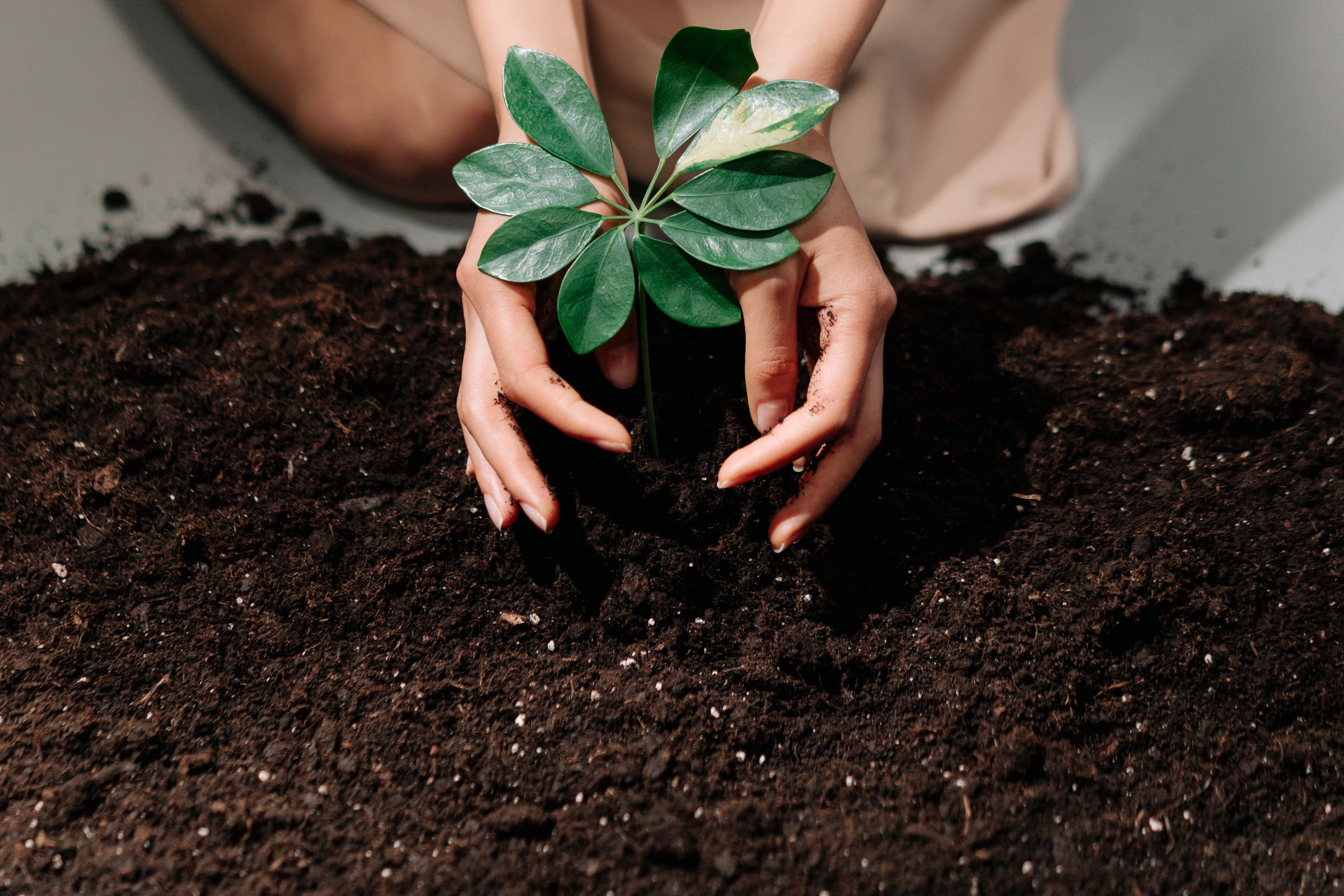
Buthelezi’s turning point came a year after her diagnosis, through a training programme run by Soil for Life that demystified organic food for her. She learnt that eating this way did not have to be expensive or inaccessible. She started her own vegetable garden and began selling vegetables to her community of Mfuleni in Cape Town, then joined Soil for Life to recruit and train others in Mfuleni to grow their own food. When her garden was vandalised during Covid in 2020, her focus moved to her home garden, where she now grows tomatoes, lettuce, rhubarb, beetroot, gooseberries, strawberries, spinach, amaranth and herbs.
“I’m a farmer without land. That’s my intro. Whenever I introduce myself, I’ll be ‘a farmer without land’,” she says.
In 2021 she co-founded Food Agency Cape Town (FACT), a community research organisation advocating for people’s right to food. FACT measures food insecurity in the communities where its members live, shares the findings with those communities and holds discussions to make sense of them. Through these dialogues, members have become aware of section 27 of the Constitution, the right to food, and how that right can be assured. Buthelezi also facilitates eco clubs at a primary school in Nyanga and a high school in Salt River, Cape Town, teaching children climate-smart, environmentally friendly farming methods and the health benefits of growing their own food. At Salt River Secondary School, learners maintain a food garden and are taught about healthy eating, entrepreneurship and culinary futures.
Far from the city, in Mpumalanga areas such as Steenbok and Elukwatini, marula, both wild and domestic, grows abundantly. When the trees bear their first fruits in summer, rural communities harvest them and brew a traditional beer; in winter, the nuts are cracked and eaten. Practices like these are being lost across the globe, yet people such as Buthelezi, Method Gundidza and Christie-Ann Dinthe are working to keep traditional food systems alive.
Gundidza (51) directs the EarthLore Foundation, a South African-registered nonprofit that works with rural communities in Mpumalanga, Limpopo and Masvingo in Zimbabwe to revive traditional seeds and the rituals and ceremonies tied to seeds and farming. The foundation collaborates with community elders to protect natural sites, and it is their generational knowledge and direction, Gundidza explains, that guides the revival of indigenous crops, traditional farming culture and the return of traditional food to people’s plates. EarthLore does not promote any specific seed or crop without the elders’ direction. In Elukwatini, for instance, he has supported communities growing maize because the elders taught him its significance; maize is traditionally used for beverages like magau and traditional beer.
Traditional diets, according to the GHAI, are rooted in fresh, local and minimally processed foods such as vegetables, fruits, legumes, whole grains and animal products, typically home-cooked, seasonal and shaped by a community’s environment and culture. They also carry a lighter environmental footprint: ultra-processed foods depend on resource-intensive monocultures that compromise biodiversity, while their packaging, supply chains, storage and transport generate pollution, waste and greenhouse gas emissions. Traditional diets need less packaging and transport and promote more sustainable farming.
Gundidza notes that agroecology has become a huge movement across Africa, but traditional food systems have always used its principles. “Agroecology movements… this is really the essence of what traditional food systems are about. To grow food without chemicals, grow food that is authentically ours, to grow food that is free of genetic modification, to grow food that when entering our bodies, it nourishes us,” he says.
For 24-year-old Christie-Ann Dinthe, the shift began in high school, when she noticed feeling fatigued after eating ordinary white or brown bread and started experimenting to learn what suited her body. “I’m in my early 20s. And there’s a lot of growing pains that come with it. And I’ve realised, if I stay away from certain things, like added sugar or processed meats, I’m able to understand myself better,” she says. She has cut out added sugars, seed oils, ultra-processed meats and ready-made microwave meals.
Her family rarely dines out, so evenings are spent around the table over a home-cooked meal prepared by her or her mother, who usually cooks traditional seven-colours dishes while Dinthe experiments, adding date syrup instead of sugar to pastas or slipping fruits and vegetables into cakes where they would not conventionally appear. The GHAI warns that ultra-processed foods undermine exactly this kind of connection, reducing opportunities to cook and share meals, and leaving people disconnected from the social and cultural experiences traditionally tied to food.
“It’s definitely a bonding experience. We get to share a meal. And I’m always excited to ask them: ‘What do you guys think about this?’ After cooking with these types of foods for so long, I get to experiment, because I now know what each ingredient does. So I eat with them and ask: ‘How does it taste? Did you enjoy it? What could I change?’ It’s nice,” Dinthe says.