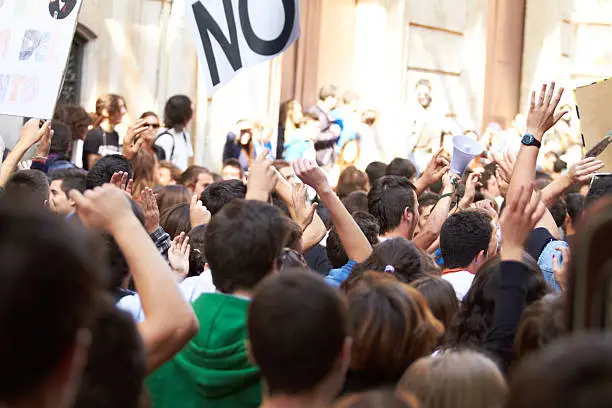
Police Clashin Johannesburg clashed with protesters from Operation Dudula and the MK Party during a heated Dudula protest near Nasrec on Tuesday.
At least eight people were arrested after demonstrators pushed past barricades, accusing authorities of silencing their voices. The unrest marks a new escalation in post-G20 tensions over immigration, jobs, and government accountability.
What Happened
The Dudula protest began early Tuesday morning, drawing hundreds of participants carrying placards and chanting anti-immigration slogans.
Organizers claimed the government continues to ignore widespread frustration over unemployment and service collapse, blaming undocumented migration for worsening poverty.
The situation intensified when protesters marched toward the Nasrec Expo Centre, where a heavy police presence was still in place following last week’s G20 meetings.
Police fired stun grenades and rubber bullets to push the crowd back after they refused to disperse from the restricted zone.
A Johannesburg police spokesperson said:
“The gathering was approved at a safe distance from Nasrec. When protesters tried to break through barriers, officers acted lawfully to restore order.”
Eyewitnesses described chaotic scenes as tear gas filled the air and demonstrators fled into nearby streets. Traffic in southern Johannesburg was briefly disrupted as officers cleared the area.
Operation Dudula’s Accusations
Operation Dudula leaders accused the city and national police of attempting to “bury the people’s message” by confining their protest to an isolated field far from the media and officials.
Movement leader Zandile Mbele said authorities were “deliberately hiding” the group from public view.
“We came to speak directly to the government, not to an empty street,” she said.
“They want to silence us because our message is inconvenient.”
Mbele argued that the Dudula protest was peaceful until officers intervened.
She demanded an investigation into what she called “unnecessary police aggression” and the immediate release of detained members.
The group, which has staged numerous anti-migrant demonstrations since 2022, insists its campaign is about “reclaiming South Africa for South Africans.”
Critics, however, say its messaging fuels xenophobia and distracts from the country’s broader economic failures.
MK Party Joins the Unrest
The MK Party, an emerging political faction with roots in liberation politics, joined the Dudula gathering—turning what began as a single-issue protest into a broader populist demonstration.
MK supporters carried banners condemning corruption and inequality, chanting “the people are hungry while leaders are rich.”
Party spokesperson Nhlamulo Ndhlela told reporters their presence was about “solidarity with working-class frustration.”
“Our movement stands with communities tired of empty promises,” he said.
“We do not support hate against migrants, but we understand the anger of citizens left behind.”
While the MK Party officially distanced itself from anti-immigrant rhetoric, their participation blurred the lines between social activism and political mobilization.
Several party members were reportedly among those arrested, though police have not confirmed their affiliations.
A City on Edge
The Dudula protest comes at a volatile time for Johannesburg, where service disruptions, rising crime, and poor infrastructure have fueled growing discontent.
Residents in Soweto and surrounding areas have staged repeated demonstrations over water shortages, electricity cuts, and unemployment.
According to sociologist Dr. Thandi Mkhabela, the protest’s timing—just days after the G20 Summit—was strategic.
“Groups like Operation Dudula want global attention,” she said.
“They believe shouting near international events amplifies their message of neglect.”
Authorities had anticipated unrest and deployed extra police to protect key installations, including roads leading to the Nasrec conference zone.
Despite this, protesters accused the government of “hiding from its people.”
Police and Government Reaction
The Johannesburg Metropolitan Police Department (JMPD) confirmed nine arrests for public disturbance, vandalism, and violating municipal protest permits.
Spokesperson Xolani Fihla defended the police response, saying officers acted proportionately given the risk of escalation.
“Our priority is safety. No one will be allowed to threaten public order or invade high-security areas.”
Government spokesperson Phumla Williams condemned the violence while acknowledging that public frustration over immigration and unemployment remains high.
“Citizens have every right to protest,” she said.
“But those rights must be exercised responsibly. We will not tolerate lawlessness disguised as activism.”
The Department of Home Affairs announced that new border enforcement measures and job-protection policies are under review to address community grievances without promoting hostility toward migrants.
Human Rights Concerns
Human-rights groups warned that growing anti-immigrant sentiment could inflame racial and social divisions.
The Consortium for Refugees and Migrants in South Africa (CoRMSA) urged both government and protesters to de-escalate.
“Blaming migrants will not create jobs or fix infrastructure,” said CoRMSA director Sibusiso Kasa.
“We need policies that tackle corruption and inequality, not scapegoats.”
The South African Human Rights Commission (SAHRC) also expressed concern about reports of intimidation during the Dudula protest, calling for an independent review of policing tactics and public conduct.
Social Media and Public Reactions
Footage from the Nasrec clashes went viral within hours.
Videos showed protesters running through clouds of tear gas, while others filmed police vehicles advancing through crowds.
The hashtags #DudulaProtest, #MKParty, and #NasrecUnrest dominated X (formerly Twitter) and Facebook, generating millions of impressions.
Supporters hailed the protest as a “wake-up call for leaders,” while critics labeled it “a dangerous show of populism.”
One widely shared post read:
“The government listens to the world, not its people. Dudula just made them hear us.”
Another post countered:
“This is not patriotism—it’s xenophobia in disguise.”
Analysts warned that misinformation, including old protest footage, was being repurposed to inflame tensions.
Political Fallout
The protest’s impact rippled through South Africa’s political circles.
The Democratic Alliance (DA) criticized the government for “losing control of public order,” while the Economic Freedom Fighters (EFF) called the protest “a symptom of deep inequality, not a solution.”
Meanwhile, the African National Congress (ANC) condemned both groups for “irresponsible agitation,” emphasizing that law enforcement must maintain stability before the 2026 elections.
A statement from the ANC headquarters said:
“True leadership means addressing grievances through dialogue, not street chaos.”
Political commentators say the alliance between Operation Dudula and MK Party activists could reshape the protest landscape, potentially giving rise to new populist coalitions.
What Happens Next
Authorities announced a joint police and city inquiry into the Nasrec violence, promising transparency in reviewing crowd-control tactics.
Operation Dudula vowed to continue its campaign “peacefully but persistently,” planning another march in December focused on “restoring South African dignity.”
MK Party officials hinted they may organize their own demonstration centered on unemployment and service failures, distancing themselves from anti-migrant rhetoric.
However, analysts caution that overlapping frustrations could again lead to confrontation.
“This was not an isolated event,” warned Dr. Mkhabela.
“Until leadership offers clear solutions, protests like these will continue to erupt in major cities.”