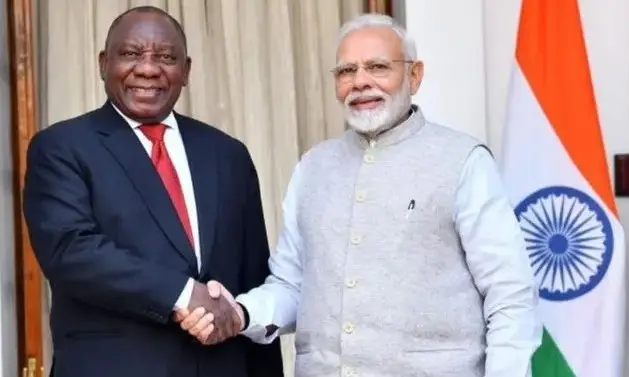
New Delhi, 24 November 2025 – In the wake of the 2025 G20 summit, Indian Prime Minister Narendra Modi commended South African President Cyril Modi Ramaphosa for hosting a summit that prioritized the Global South. During post-summit discussions, both leaders highlighted the need for United Nations reforms, equitable trade practices, and enhanced technological collaboration, reinforcing the strategic partnership between India and South Africa.
What Took Place at the G20 Summit
The G20 summit in Johannesburg brought together leaders from the world’s 20 major economies to discuss pressing global issues. Key focus areas included economic equality, sustainable development, and digital innovation.
Prime Minister Modi praised Ramaphosa’s leadership for ensuring that the concerns of developing nations were addressed, marking a significant step toward inclusive global governance.
The summit also covered topics such as climate finance, fair trade, technology access, and pandemic recovery strategies, ensuring that developing countries’ priorities were incorporated into global decision-making.
Official Statements
According to a statement from the Prime Minister’s Office (PMO), Modi remarked:
“President Ramaphosa’s leadership at this G20 summit has strengthened the voice of the Global South and emphasized the importance of inclusive growth. India remains committed to deepening cooperation with South Africa in trade, technology, and sustainable development.”
President Ramaphosa added:
“Working with India allows us to ensure that developing nations’ priorities are represented in global policy discussions. The summit outcomes reflect our mutual commitment to equity and sustainable progress.”
These statements underline the shared vision of both nations to promote fairness and inclusivity in international forums. Media outlets and social media platforms widely reported these remarks, reinforcing India’s leadership in advocating for Global South interests.
Focus on UN Reforms
A significant part of the discussions was centered on United Nations reforms. Modi reiterated India’s long-standing call for expanding the UN Security Council to include more representation from developing countries.
Ramaphosa expressed support, emphasizing the need for a modernized UN structure that mirrors current geopolitical and economic realities. Both leaders agreed that inclusive governance is essential to tackle global challenges such as climate change, public health crises, and economic inequality.
This joint effort demonstrates India and South Africa’s intent to strengthen the Global South’s role in international decision-making processes.
Strengthening Bilateral Ties
Beyond global governance, Modi and Ramaphosa discussed ways to enhance bilateral cooperation in trade, technology, and innovation. Key areas of focus included:
- Renewable energy initiatives to support climate goals.
- Collaborations in IT and digital technology to boost innovation.
- Joint ventures and investments to stimulate economic growth.
The leaders emphasized fast-tracking agreements that would deepen ties across strategic sectors. Analysts view this as a significant milestone in India-South Africa relations, positioning the two nations as leaders in advancing Global South development priorities.
Reactions from Media and Public
The summit outcomes and post-summit remarks quickly gained traction on social media, trending under hashtags such as #G20Summit, #GlobalSouth, and #IndiaSA.
Political analysts highlighted Modi’s commendation of Ramaphosa as a reflection of India’s focus on African partnerships and broader Global South advocacy. News outlets emphasized that the summit marked a major step forward for equitable global governance, with India and South Africa playing key leadership roles.
International coverage portrayed the summit as a pivotal moment for developing nations’ representation, with Modi and Ramaphosa’s collaborative approach serving as a model for inclusive leadership in multilateral forums.
Next Steps
Looking ahead, India and South Africa plan to intensify multilateral cooperation, particularly in trade, technology, and sustainable development.
Bilateral ministerial meetings and summits are scheduled for 2026 to turn discussions into actionable agreements. Both leaders reiterated that ongoing dialogue on UN reforms will ensure that the Global South maintains a strong voice in shaping international policy.
The partnership is expected to spearhead initiatives promoting inclusive economic growth, technological advancement, and sustainable development, providing a framework for other emerging economies to follow.