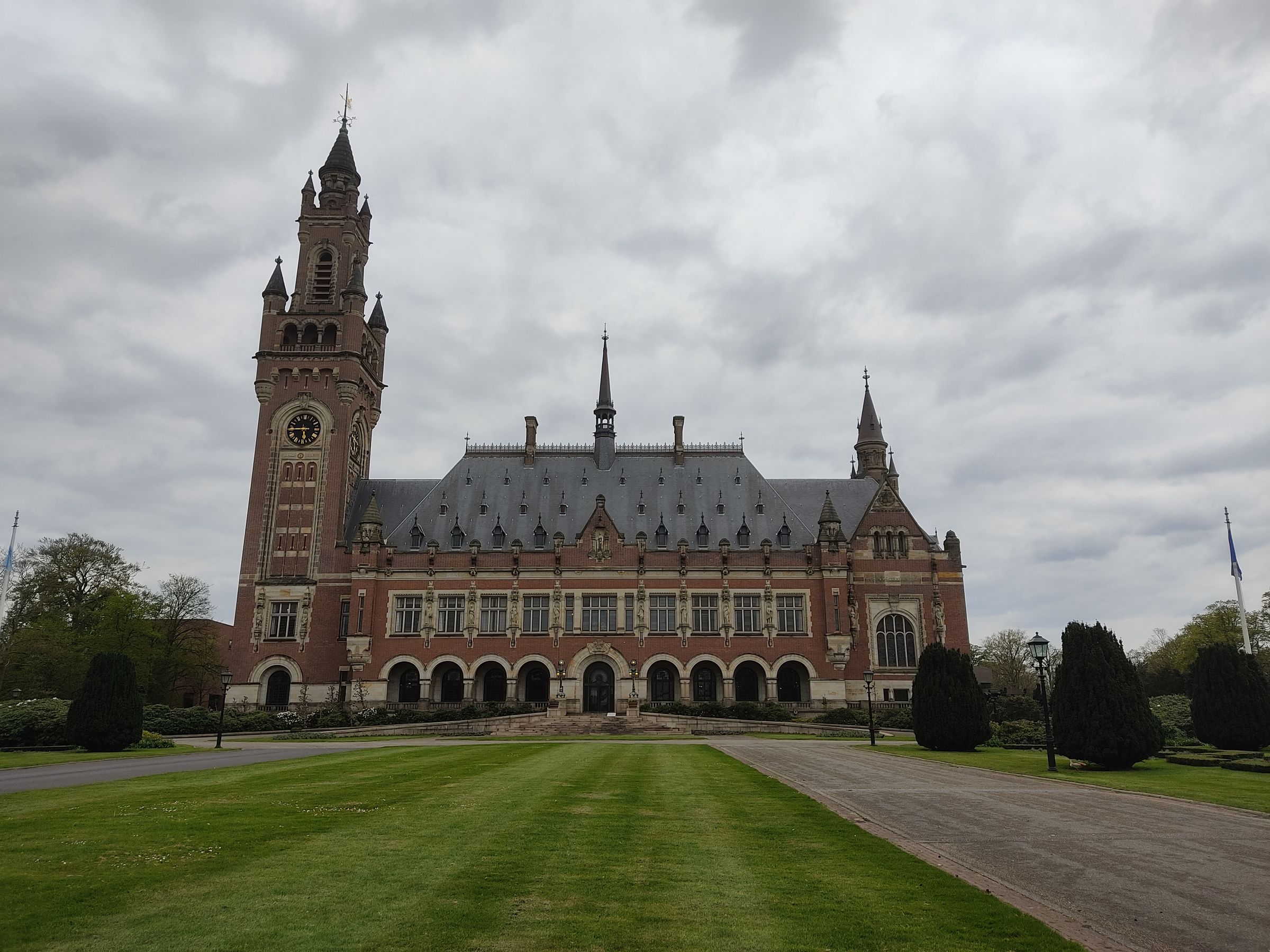
The International Court of Justice’s finding that Myanmar committed genocide against the Rohingya has handed South Africa a meaningful legal boost in its own genocide case against Israel over the war in Gaza, according to legal experts tracking both proceedings at the World Court.
The judgment, delivered Thursday at The Hague in a case brought by Gambia, establishes a precedent with direct consequences for how genocidal conduct is assessed: the court accepted that genocidal intent can coexist with a military objective. That point matters for South Africa’s argument, which rests on similar questions of state responsibility under international law.
Both cases, while legally distinct in their circumstances, are anchored in the same treaty. Each turns on allegations that a state breached its obligations under the 1948 Genocide Convention, the framework that governs how signatory states must prevent and punish genocide.
The Myanmar ruling found that the country had violated the convention on multiple grounds, stemming from the mistreatment of the Muslim Rohingya minority by the armed forces. Gambia initiated the proceedings accusing Myanmar of genocide against the Rohingya.
For South Africa, the significance lies in the reasoning rather than the outcome itself. By confirming that a state’s military aims do not negate genocidal intent, the court has opened a line of argument that plaintiffs in comparable convention cases can now draw upon. Legal experts said the ruling will strengthen South Africa’s position as its case against Israel proceeds.
Meanwhile, the judgment underscores the growing use of the International Court of Justice as a venue for states to hold one another accountable under the Genocide Convention, with Gambia’s case against Myanmar and South Africa’s case against Israel both testing the treaty’s reach in modern conflicts.
The courtroom proceedings drew attention in part because of the figures involved. Nobel Peace Prize laureate Navi Pillay was present in the courtroom on the day the court delivered its judgment, an appearance captured by Reuters photographers as the ruling was handed down in The Hague, Netherlands.
For the parties involved, the immediate effect is precedential rather than dispositive. The Myanmar case concerned Myanmar’s conduct toward the Rohingya; the South Africa case concerns the war in Gaza. But the shared legal architecture means reasoning adopted in one convention case travels readily to another, and the court’s Thursday finding gives South Africa’s legal team fresh authority to cite as its case moves forward.
The ruling marks a landmark moment for the court itself, which has now found a state in violation of the Genocide Convention on multiple grounds. That determination will shape litigation well beyond the two cases currently before it, and it raises an open question: how far the 1948 treaty’s reach will extend across the conflicts still unfolding before the court.